

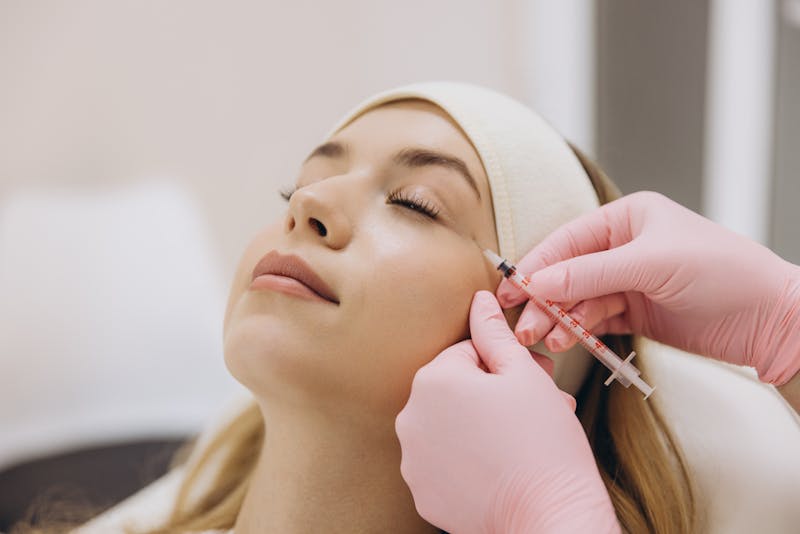
BOTOX® is one of the most widely used cosmetic treatments in the world, valued for its ability to smooth wrinkles and refresh facial expression without surgery. While it is considered very safe when performed by a qualified injector, it is still a medical treatment that temporarily alters muscle activity—and that means side effects and complications are possible.
Understanding what is normal, what is rare, and what actually indicates a problem can help patients make more informed decisions and avoid unnecessary anxiety.
Common BOTOX Side Effects and How Long They Last
Most BOTOX® side effects are mild, predictable, and temporary. They typically occur at or near the injection site and resolve quickly without treatment.
Bruising, Swelling, and Tenderness
Mild bruising, swelling, or tenderness at the injection sites is the most common side effect of BOTOX®. These effects usually resolve within a few days as the skin heals. Risk can be increased by blood thinners, alcohol consumption, or sensitive skin.
Headache and Mild Flu-Like Symptoms
Some patients experience a mild headache or flu-like feeling shortly after treatment. These symptoms are generally short-lived and resolve within 24–48 hours.
Rare but Serious Side Effects to Know
- Eyelid drooping (ptosis)
- Difficulty swallowing (dysphagia)
- Temporary muscle weakness outside the treatment area
Why Some BOTOX Results Look Frozen or Unnatural
Unnatural or “frozen” results are not caused by BOTOX® itself, but by how it is administered. Over-injection or poor anatomical placement can restrict natural movement.
The Role of Dosing and Placement in Natural Results
Natural-looking results depend on conservative dosing and precise placement within facial muscles. Skilled injectors aim to soften movement rather than eliminate expression entirely.
How to Avoid the Frozen Look
- How do you determine dosing for different facial areas?
- How do you avoid over-treatment?
- How often do you perform BOTOX® injections?
- What is your approach to maintaining natural facial expression?
Serious BOTOX Complications: Drooping Eyelid (Ptosis)
What Causes Ptosis After BOTOX?
Ptosis occurs when BOTOX® affects muscles that control eyelid elevation due to migration or incorrect placement.
How Long Does It Last?
- Most cases: 3–6 weeks
- Rare cases: up to 3 months
Treatment Options
Prescription eye drops such as apraclonidine may temporarily improve eyelid position, but the condition resolves naturally over time.
Other Complications: Asymmetry, Spock Brow, and Migration
Mild asymmetry or uneven muscle relaxation may occur and typically improves as the product settles. Minor touch-ups may help correct imbalance.
How to Minimize Risk — Why Provider Expertise Matters
The safest results depend heavily on injector skill and anatomical knowledge.
- Balance muscle groups for symmetry
- Adjust dosing for facial movement patterns
- Avoid diffusion into unintended muscles
- Maintain natural facial expression
What to Do If You’re Unhappy With Your Results
Most concerns improve within 1–2 weeks. If complications occur, your provider may recommend supportive treatments while the product naturally wears off.
What Patients Should Understand About BOTOX Risks and Results
BOTOX® is a precise medical procedure that depends on anatomy, dosing strategy, and injector skill. When performed correctly, side effects are typically mild and temporary, and serious complications are rare.
The most important factor in achieving safe, natural-looking results is not the product itself, but the expertise of the provider administering it, and Thompson Facial Plastics is just that. Schedule your consultation today.