
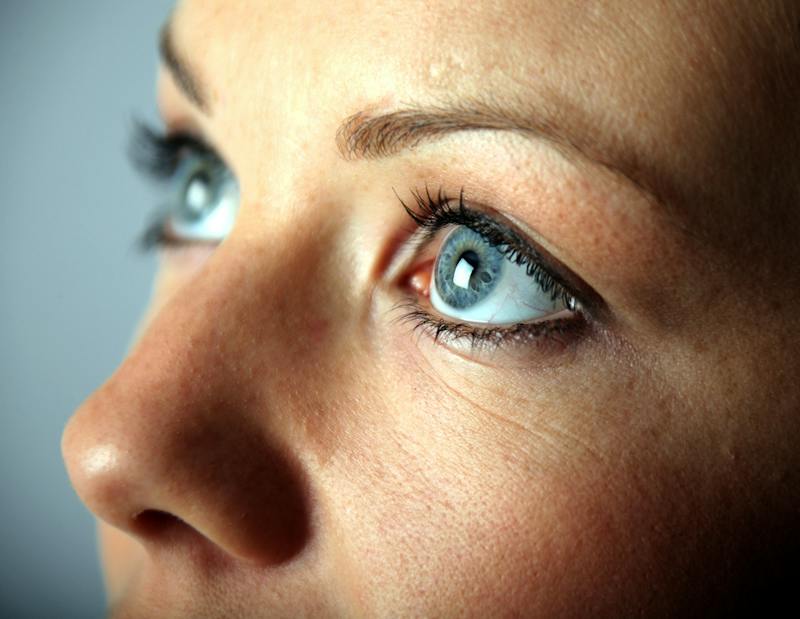
Losing weight is a real accomplishment, but it often reshapes the face in ways people don't expect. For many patients, that shows up first around the eyes: shadows that weren't there before, a hollow look that reads as exhausted no matter how much sleep they get. For most people in this situation, eyelid surgery can meaningfully help, especially when it's planned to add volume back rather than simply remove tissue.
At Thompson Facial Plastics in Denver, Dr. R. William Thompson, M.D., builds every blepharoplasty plan around a patient's own anatomy and goals, an approach that matters even more once weight loss has changed the shape of the face. In this blog, Dr. Thompson draws on his experience with post-weight-loss patients to walk through why this happens and what tends to help.
Why Do Eyes Look Sunken After Weight Loss?
Eyes can look sunken after significant weight loss because the face loses fat along with the rest of the body. The fat pads beneath the eyes and in the cheeks thin out, the bony rim of the eye socket becomes easier to see, and the skin may loosen as support disappears beneath it. Together, these changes cast shadows that read as fatigue even in someone who feels rested.
The scale of this change has recently been measured. A 2025 imaging study in Otolaryngology, Head and Neck Surgery tracked patients before and after GLP-1-related weight loss and found a median 9% decrease in midface volume, with roughly 7% of that volume lost for every 10 kilograms (about 22 pounds) shed. Most of the loss came from the superficial fat layers closest to the skin, while the deeper fat around the eye socket stayed comparatively stable. That mismatch is what creates the visible dip beneath the eye.
Dr. Thompson has seen this pattern show up more often in his Denver practice as GLP-1 medications have become more common, particularly among patients whose weight came off faster than their skin and underlying fat could adjust.
Can Eyelid Surgery Fix Sunken or Hollow Eyes?
Eyelid surgery can meaningfully improve sunken or hollow eyes, especially lower eyelid surgery built around repositioning fat. For these patients, blepharoplasty often means moving the existing fat pad down into the hollow beneath the eye, smoothing the transition from eyelid to cheek so the result looks rested rather than altered.
The right combination of treatment depends on what's actually changed, which tends to fall into a few patterns:
- Upper-lid hooding: Heavy, drooping skin above the lashes, often addressed with upper blepharoplasty or a brow lift if the brow has also dropped
- Under-eye hollows: Dark grooves or shadows beneath the eye, improved with lower blepharoplasty, fat repositioning, fat transfer, or filler
- Bags paired with hollows: Puffiness with a dip just below it, which often calls for lower blepharoplasty with fat repositioning
- Overall facial deflation: Flatter cheeks and a tired look across the whole face, usually addressed by combining blepharoplasty with fat transfer or another facial procedure
Most patients land somewhere between these patterns, which is why a personalized plan matters more than any single procedure.
Pairing Blepharoplasty With Fat Transfer or Fillers
Blepharoplasty pairs naturally with volume treatments, since significant weight loss tends to take away both shape and fullness at once. Eyelid surgery refines the skin and repositions existing fat. Fat transfer adds new volume beneath the eyes using the patient's own fat, harvested elsewhere on the body. Facial fillers offer a non-surgical way to soften under-eye hollowing for patients who want to see the effect before committing to surgery.
Long-term data on fat repositioning is reassuring. A study of 41 patients who had lower eyelid surgery with fat transposition found the tear-trough correction held in every patient at a 44-month follow-up, with no major complications reported (Majidian et al., Journal of Cosmetic Dermatology, 2021). A 2025 review in the Journal of Clinical Medicine focused on GLP-1-related facial changes and noted that pairing fat repositioning or grafting with skin-tightening treatments can work well once skin has also loosened.
Patients at Thompson Facial Plastics who lost weight through GLP-1 medications often choose to combine blepharoplasty with fat transfer in one surgical session, avoiding a second procedure down the road. Dr. Thompson decides on the right mix after examining the eyes and the rest of the face together, since weight loss rarely affects just one area.
Who Is a Good Candidate After Weight Loss?
Good candidates are bothered by eyes that look more tired or aged than they feel, are in good general health, and have reasonable expectations about a natural-looking result. Patients who lost weight through GLP-1 medications, diet and exercise, or bariatric surgery can all be candidates, since the face responds to fat loss in similar ways no matter the cause.
This is a fast-growing group. According to the American Society of Plastic Surgeons, more than 800,000 aesthetic patients of its member surgeons used weight-loss medications in 2024, the same year blepharoplasty was performed 120,755 times nationally. Timing matters: Dr. Thompson typically wants to know where a patient stands in their weight-loss journey, and whether their weight has settled, before finalizing a surgical plan.
Recovery and Results
Recovery after eyelid surgery for weight-loss-related changes follows a familiar pattern, though adding fat transfer can stretch swelling out by a few extra days as the face adjusts to volume in a new spot. Most patients plan on cold compresses and a few quiet days right after surgery, with upper-lid patients often back to light activity within a day or two. Bruising around the lower lids tends to fade over one to two weeks, with strenuous exercise generally paused for about that same stretch.
Because weight loss changes the whole face, the full result can take a little longer to read clearly. Most patients notice a brighter look within a few weeks, and any added volume keeps settling in over the following months as swelling fully resolves.
Your Eyelid Surgery Consultation in Denver
A consultation for eyelid surgery after weight loss covers more ground than a typical first visit. Dr. Thompson still examines the eyelid anatomy alongside the rest of the face, but for these patients he also asks about the weight-loss method, the timeline, and whether weight has stabilized, since all three shape which combination of surgery and volume treatment will hold up best over time.
FAQs
Will eyelid surgery make my eyes look more hollow?
Eyelid surgery shouldn't make your eyes look more hollow when it's planned around your anatomy. For patients who have lost weight, surgeons can reposition under-eye fat into the hollow to smooth the eyelid-to-cheek transition. Volume treatments such as fat transfer or fillers can add fullness wherever it's still needed.
How long should my weight be stable before eyelid surgery?
There's no single rule for every patient. Many people prefer to plan surgery once their weight has settled, so the result reflects how their face will look going forward. Dr. Thompson will review your weight-loss history and goals at your consultation and help you choose the best timing.
Can I have eyelid surgery while I'm still taking a GLP-1 medication?
It depends on your health and your surgical plan. Tell Dr. Thompson about every medication you take, including semaglutide or tirzepatide, so he can coordinate safe timing, working with your prescribing doctor when needed.
Is fat transfer or filler better for under-eye hollows after weight loss?
Both can soften under-eye hollows, and the better choice depends on your goals. Fat transfer uses your own fat for lasting volume and pairs naturally with eyelid surgery. Fillers offer a non-surgical option you can try first. Dr. Thompson can help you compare both based on your anatomy.
Can upper and lower eyelid surgery be done along with fat transfer?
Yes. Many patients benefit from treating both lids at once with fat transfer added in the same session, so the eyes stay balanced and recovery happens all at once.
Will my results last if I lose more weight later?
Eyelid surgery results tend to be long-lasting, but the face keeps changing with age and with any further shifts in weight. A large additional weight loss down the road can reduce facial volume again, so it's worth sharing future plans with your surgeon. Upper eyelid results can hold for up to a decade for most patients.
Ready to Look as Rested as You Feel? Talk to Dr. Thompson
Weight loss is an accomplishment, and it shouldn't leave the eyes looking more tired than the rest of the face feels. For many patients, eyelid surgery that repositions fat, often paired with fat transfer or filler, can restore a fresher look around the eyes without erasing what makes a face recognizably their own. The clearest next step is a conversation about your specific anatomy and goals. Schedule a consultation with Dr. Thompson at Thompson Facial Plastics in Denver to find out whether blepharoplasty is right for you.
This information is provided for educational purposes only and does not replace a consultation with a board-certified plastic surgeon. Outcomes, risks, and suitability vary from patient to patient.